Look down a Newark street from a high window and you see two kinds of roof. Flat or nearly flat roofs on the attached rowhouses, walk-ups and apartment buildings, hidden from the sidewalk behind parapet walls. And pitched roofs, with shingles or slate, on two-family homes and detached houses. Which one you have changes almost everything about how it leaks, how it is repaired and what the permit rule says.
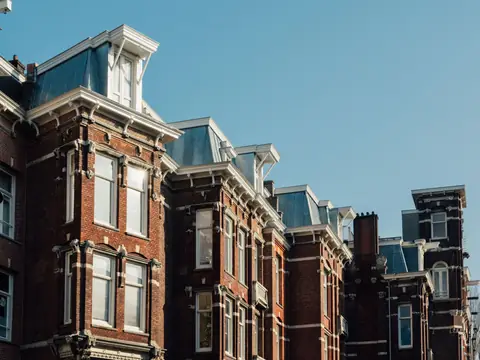
Why so many Newark roofs are flat
Flat and low-slope roofs are common on city rowhouses and multi-family buildings. In the East Ward, which includes the Ironbound, the housing is mostly large apartment buildings and rowhouses. On an attached building, a flat roof makes sense: it fits between shared walls, sits out of sight behind the parapet, and gives room for vents, hatches and equipment. It is not truly flat. It slopes gently toward a drain or a scupper in the parapet, and everything depends on that path staying open.

Flat roofs: materials and weak spots
Flat roofs are covered with sheets or layers rather than overlapping pieces: modified bitumen (rolled asphalt-based sheets), EPDM (rubber), TPO (a light single-ply sheet), built-up roofing (layers of felt and asphalt), or a coating over an older surface. Water does not run off quickly, so the weak spots are the places it can sit or slip in:
- Seams between sheets that open with heat, cold and movement
- Blisters where air or moisture is trapped under the covering
- Ponding water over low spots or blocked drains
- Flashing where the roof turns up the parapet, and the coping on top
- Vents, hatches, skylights and equipment curbs
Sun matters too. The July average high at Newark Liberty is 86.9 degrees, and a dark flat roof in full sun runs hotter than the air. More on repairs is on the flat roof repair in Newark page.
Pitched roofs: materials and weak spots
A pitched roof sheds water by gravity. Many in Newark carry asphalt shingles, and some older houses have slate. Because water runs off fast, the trouble spots are the joints and edges rather than the open slopes:
- Flashing around chimneys, vents and skylights
- Valleys where two slopes meet
- Shingles lifted or torn off by wind, or slates cracked and slipped
- Gutters and leaders that clog and overflow
- Ice in the gutters backing meltwater under the roof edge

Side by side
| Flat or low-slope | Pitched | |
|---|---|---|
| Common on | Rowhouses, walk-ups, apartment buildings | Two-family homes, detached houses |
| Coverings | Modified bitumen, EPDM, TPO, built-up, coatings | Asphalt shingles, slate |
| How water leaves | Slowly, to a drain or scupper | Quickly, to gutters and leaders |
| Usual leak points | Seams, blisters, ponding, parapet flashing | Flashing, valleys, damaged shingles or slate, ice at the edge |
| Access | Often a roof hatch | Ladder; slate needs care underfoot |
The weather both have to handle
Newark Liberty averages 46.6 inches of rain and melted snow and 31.5 inches of snow a year in the 1991 to 2020 normals. A flat roof feels that as water standing longer after storms and as freeze and thaw at the seams. A pitched roof feels it as ice in the gutters and as wind lifting shingles. Neither is better in every way; each needs the right kind of attention.
Permits follow the building, not the roof shape
New Jersey’s ordinary-maintenance rule lets the existing roof covering on a detached one- or two-family house be repaired or replaced without a permit, flat or pitched. Many flat roofs in the city sit on attached or larger buildings, which that item does not name, so for those ask the City of Newark’s construction office before work starts. The Newark roofing permit guide goes through each case.
Telling a roofer which you have
When you call or send the form, say whether the roof is flat or pitched, what it is covered with if you know, and whether the building is attached. A photo from a window or the hatch helps. If you are weighing a repair against a new roof, the roof replacement in Newark page explains materials and the contract, and the roof repair page covers leaks on both kinds.
Questions people ask
Is a flat roof worse than a pitched roof?
Not worse, different. A flat roof drains slowly and needs clear drains and sound seams; a pitched roof sheds water fast but has flashing, valleys and gutters to watch.
What is my flat roof covered with?
Usually modified bitumen, EPDM rubber, TPO, built-up roofing or a coating. A photo of the surface and a seam lets a roofer tell.
Can a rowhouse have a pitched roof?
Some do, but flat and low-slope roofs are the common kind on city rowhouses. Tell the roofer what you see from the street or the hatch.
Get a Newark roofer
Get a Newark roofer on the roof
Send the details and an independent local roofer can contact you.
